How to Read a Lab Report (COA) Before You Buy Hemp Products
By Adil K. · Lab Reports & Product Verification · Published 2026-08-11 · 8 min read · Published by 247 Smoke Shop Sand Lake / Universal Studio, Orlando, FL · 21+
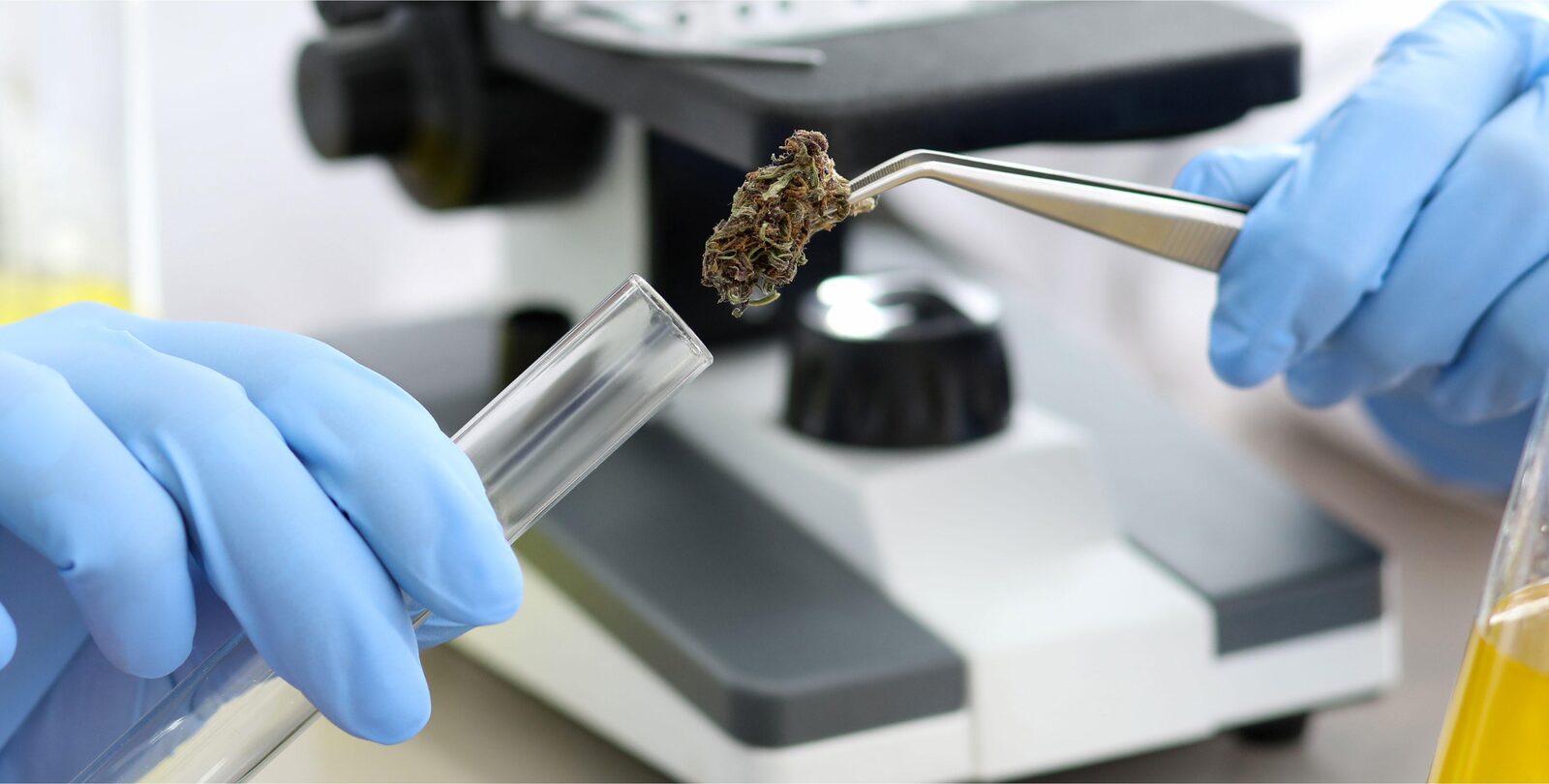
People usually ask us about lab reports for one of two reasons. Either they noticed a QR code on a package and want to know what it actually leads to, or a friend told them never to buy hemp products without checking the lab report first — which is good advice, as far as it goes.
The report behind that QR code is a certificate of analysis, or COA: a document from a testing laboratory saying what was actually in a specific batch of product. It's the main tool you have for checking that the label matches what's inside. The catch is that COAs are written by chemists, so the first one you open looks like homework. It isn't, once you know which lines to read. Here's how we walk customers through one at the counter.
Start with the header: lab, batch and dates
Before you read a single number, check who wrote the report and what exactly it describes. The lab should be an independent testing laboratory — not the brand grading its own homework. Florida law is specific about this: a lab testing hemp extract sold here can't have a direct or indirect financial interest in the company whose product it's testing.
Then find the batch or lot number. This is the part people skip, and it's the one worth slowing down for. A COA only describes the one batch that was tested, so the batch number on the report has to match the number printed on the package in your hand. A report for some other batch — even from the same brand, even for the same product — tells you nothing about yours.
The test date rounds out the header. There's no magic cutoff, but a report from several years ago describing a product with a recent manufacture date should make you pause. Batches don't sit around that long; recycled paperwork does.
Good to know: Florida requires hemp extract containers to carry a scannable barcode or QR code that links to the batch's COA, plus the batch number and an expiration date. If a hemp extract product sold here has no QR code and no batch number at all, that's not a small oversight.
The potency table: what the percentages mean
The potency section lists each cannabinoid the lab measured — Delta-9 THC, THCA, CBD and others — usually as a percentage by weight and in milligrams per gram. Two abbreviations do a lot of work here: 'ND' means not detected, and 'LOQ' is the smallest amount the lab can reliably measure. A value below LOQ isn't zero; it's just too small to pin down.
Now the part that confuses almost everyone: the difference between Delta-9 THC and 'total THC.' The federal definition of hemp is written around Delta-9 alone — cannabis with a Delta-9 THC concentration of not more than 0.3% on a dry-weight basis. But THCA converts to Delta-9 THC when heated, so USDA's production rules require harvested hemp to be tested in a way that accounts for that conversion. That's why most labs print a calculated 'Total THC' line: Delta-9 plus the portion of THCA that would become Delta-9 when heated. Two products with the same Delta-9 number can be very different once a flame is involved, and the Total THC line is where you see it.
Florida adds its own layer, and it's stricter than people assume. The state's hemp statute defines hemp using total Delta-9 THC — not the bare Delta-9 number — capped at 0.3% (dry weight for plant material; wet weight for hemp extract). And the COA that Florida requires for hemp extract has to state that the batch's total Delta-9 concentration didn't exceed 0.3%. So when you're reading a COA in Florida, the total line isn't a footnote. It's the number the state's own rule points at.
We're describing what the statutes say, not offering a legal opinion on any particular product. When in doubt about a specific item, ask — that's what the counter is for.
Contaminant panels: the part most people skip
Potency gets all the attention, but the contaminant section is arguably the better reason COAs exist. A full-panel report screens for things nobody wants in a product they're consuming, and each line shows the substance, the limit the lab used, and a pass/fail result.
Not every COA includes a full panel — they cost more, and a potency-only report isn't automatically suspicious. But Florida's COA requirement for hemp extract includes a statement that the batch doesn't contain contaminants unsafe for human consumption, and for anything you inhale, a full panel is genuinely worth looking for. If a contaminant section exists, every line should read pass or ND.
- Pesticides — residue from cultivation
- Heavy metals — lead, arsenic, cadmium, mercury drawn from soil
- Residual solvents — leftovers from extraction (mainly for concentrates)
- Microbials — mold, yeast, E. coli, salmonella
What a COA can't tell you
A COA verifies the contents of one tested batch. That's all it does — and it's worth being honest about the limits. It doesn't guarantee a product is safe for you personally, and it doesn't make a product legal everywhere; states differ, and what's compliant in one place may not be in another.
It also isn't a government endorsement. The FDA has approved exactly one CBD product, a prescription drug, and it has said publicly that it has seen only limited safety data on CBD and that some products on the market carry unproven claims. A clean COA from a good lab is real, useful information about what's in the package. It is not a substitute for your own judgment, and any product page or salesperson treating it as a seal of approval is overselling it.
Red flags that mean walk away
Most of the time a COA quietly confirms what the label says and you move on with your day. But a few patterns should end the purchase on the spot, whatever store you're standing in — including ours; we'd rather you ask at the counter than take home something you're unsure about.
- No COA available at all for a hemp-derived product
- Batch number on the report doesn't match the package
- The report describes a different product type than what you're holding (a gummy COA attached to a vape, for instance)
- Report is years old, or the lab's name returns no real laboratory when you search it
- Potency numbers that look rounded or too perfect (exactly 30.0%)
- A 'hemp' product whose total Delta-9 THC line is above 0.3%
A note for visitors staying near the parks
If you're in town for a week and staying around Universal Studios or International Drive, you'll pass a lot of shops selling hemp products, and the prices vary more than you'd expect. The temptation is to treat them all as interchangeable and grab whatever's cheapest. With this category, that's the one shortcut we'd talk you out of.
An unusually cheap product from a brand you can't find anywhere else, with no batch number and no report behind it, is cheap for a reason — you just don't get to know what the reason is. The two-minute version of due diligence works anywhere: look for the QR code Florida requires on hemp extract, scan it, and check that the batch numbers match. Any legitimate shop, ours included, should be able to pull up the report for what it sells. If the answer to 'can I see the lab report?' is a shrug, the price stops being the interesting number.
Where to find COAs for products we carry
We keep lab reports for the hemp products we stock on our lab reports page, organized by product, and staff can pull up the matching COA at the counter if you want to check a batch before buying. If a COA you want isn't posted, ask — verifying is the normal thing to do, not an awkward request.
Frequently Asked Questions
Is a COA the same thing as being 'lab tested'?
'Lab tested' on a package is just a claim; the COA is the document that backs it up. If a brand says lab tested but can't produce the report for your batch, treat the claim as unverified.
Do vapes and nicotine products have COAs too?
COAs are standard for hemp-derived products. Nicotine vapes are regulated as tobacco products under a different FDA framework and don't typically ship with per-batch COAs — for those, the closest equivalent is the brand's own authentication check on its official site. A reputable store helps, but it isn't a guarantee by itself.
What does 'total THC' mean on a potency table?
It's Delta-9 THC plus the portion of THCA that converts to Delta-9 when heated. The bare federal hemp definition is written around Delta-9 alone, but USDA's production rules test harvested hemp on a total-THC basis, and Florida's hemp statute uses total Delta-9 THC in both its definition of hemp and its COA requirement for hemp extract. In practice, in Florida, the total line is the one that counts.
Sources & References
- 7 U.S.C. § 1639o — federal definition of hemp — U.S. Code (Office of the Law Revision Counsel)
- Hemp Production Program — testing rules for harvested hemp — U.S. Department of Agriculture
- Fla. Stat. § 581.217 — state hemp program: definitions and hemp extract requirements — Florida Legislature (Online Sunshine)
- What You Need to Know About Products Containing Cannabis or Cannabis-Derived Compounds, Including CBD — U.S. Food and Drug Administration
This article is general education, not legal or medical advice. Product availability changes — call (407) 286-0540 to confirm what's in stock. 21+ with valid ID.
Related resources: Our Lab Reports & COAs · THCA in Orlando · Store FAQ
More Lab Reports & Product Verification
Read the next closely related guides in this part of the library.
© 2026 Sand Lake Smoke Shop · 247 Smoke Shop Sand Lake – Universal Studio. Original article by Adil K.. All rights reserved.